

Inflatable Rental Safety Standards in the U.S.: What Every Operator Needs to Know (ASTM F2374 & NFPA 701)

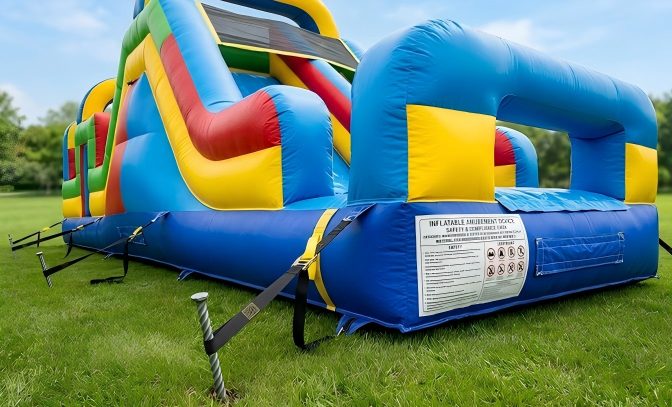
If you’re running an inflatable rental business in the U.S., understanding safety standards isn’t optional — it’s part of staying compliant, getting insured, and working with higher-value clients.
A lot of new operators assume there’s one certificate that makes everything compliant. In reality, inflatable safety in the U.S. is built around a combination of industry standards, insurance requirements, and local regulations.
This guide covers what inflatable rental operators in the U.S. actually need to know to stay compliant and work with schools, events, and insured venues.
In the U.S., inflatable rental safety is mainly guided by ASTM F2374 for equipment and operation, and NFPA 701 for fire resistance, along with state-level regulations and insurance expectations.
The Core Standard: ASTM F2374
The main industry reference in the U.S. is ASTM F2374, which outlines how inflatable amusement devices should be designed, set up, and operated.
It covers:
- Structural design and durability
- Anchoring requirements
- Blower specifications
- Safe operating procedures
- Inspection and maintenance
Most inspectors and insurance providers rely on ASTM F2374 as the baseline when evaluating whether equipment is used safely.
Fire Safety: NFPA 701
Fire resistance is another important part of inflatable safety.
NFPA 701 is the standard used to test whether materials are flame retardant.
This becomes relevant when:
- Equipment is used in public venues
- Events are held indoors or in controlled environments
- Organizers or insurers request documentation
Commercial-grade inflatables are typically made using PVC materials that are tested against NFPA 701 requirements.
State and Local Regulations
There is no single nationwide licensing system for inflatable rentals in the U.S.
Rules vary depending on the state — and sometimes even by county.
Depending on where you operate, requirements may include:
- Annual inspections
- Operating permits
- Equipment registration
- Proof of insurance
- Setup and anchoring compliance
For example, in Texas, inflatable amusement devices fall under the oversight of the Texas Department of Insurance (TDI), and inspections or permits may be required depending on how the equipment is used.
Because of these differences, it’s important to check local regulations instead of relying on general assumptions.
Insurance Requirements
In practice, insurance is what drives most safety compliance.
Most professional operators carry:
- General liability insurance (commonly $1M–$2M)
- Coverage specific to inflatable or amusement devices
Insurance providers typically expect:
- Equipment aligned with ASTM guidelines
- Proper anchoring systems
- Clear operating procedures
- Routine inspection and maintenance
Without insurance, it’s difficult to work with schools, churches, or larger organized events.
Operational Safety on Site
Safety isn’t just about the equipment — it’s about how it’s used.
Typical on-site expectations include:
- Secure anchoring with stakes or sandbags
- Monitoring wind conditions (often around 15–20 mph limits)
- Active supervision during use
- Clear user rules (age, size, number of participants)
- Safe setup areas free from hazards
Most issues come from improper setup or lack of supervision rather than equipment failure.
Training and Best Practices
While not always required by law, many operators follow structured safety practices.
Organizations like SIOTO (Safe Inflatable Operators Training Organization) provide guidance on safe setup and operation.
Following established best practices helps:
- Reduce risk
- Improve consistency
- Build trust with customers and event organizers
Why This Matters
Customers may not know the names ASTM F2374 or NFPA 701, but they do notice professionalism.
Clean equipment, proper setup, and clear communication all affect how your business is perceived.
For larger clients, documentation and compliance are often required before a booking is approved.
Operators who understand safety standards are better positioned to take on higher-value jobs and build a more stable business.
The Bottom Line
Inflatable rental safety in the U.S. is not based on a single certificate. It’s built on a combination of:
- ASTM F2374 for design, operation, and maintenance
- NFPA 701 for fire safety
- State and local regulations
- Insurance requirements
- Day-to-day operating practices
Once you understand how these pieces fit together, it becomes much easier to run a reliable operation and handle more professional work.
FAQ
Do I need certification to run an inflatable rental business in the U.S. safely?
There is no single national certification, but operators must follow ASTM standards, local regulations, and insurance requirements.
What is ASTM F2374?
It is the primary safety standard covering the design, operation, and maintenance of inflatable amusement devices.
Is NFPA 701 required?
Many venues and insurance providers require materials tested under NFPA 701, especially for public or indoor use.