

Why Some Houston Inflatable Pros Stay Fully Booked While Others Struggle to Get a Single Call

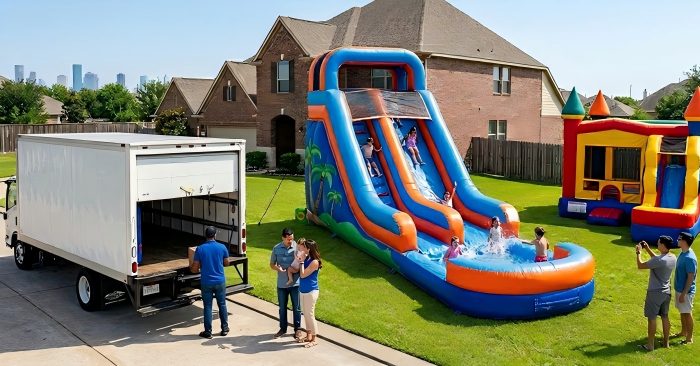
If you’re running an inflatable rental business in Houston, you’ve probably noticed something pretty quickly.
Some companies are fully booked every weekend.
Others are still looking for bookings days before Saturday.
Everyone is operating in the same city, dealing with the same heat, the same neighborhoods, and the same type of customers. So why is there such a big gap?
After spending time watching how the Houston market actually works, the difference usually comes down to a few practical decisions that many beginners overlook.
1. The “Water or Bust” Reality
A lot of new operators start with dry bounce houses because they’re cheaper.
In some cities, that can work. In Houston, it’s much harder.
From May through September, the heat changes customer behavior. Parents aren’t just looking for something fun — they’re looking for something that keeps kids cool.
That’s why water slides and wet/dry combo units dominate bookings during these months.
A basic dry bounce house might still rent, but it’s often compared on price. A good water slide, on the other hand, becomes a solution, not just an option.
In practice, many of the consistently booked operators have a large portion of their inventory focused on water-capable units.
2. Trying to Cover All of Houston Doesn’t Work
Houston is spread out. Travel time matters more than most people expect.
If you’re based in one area but regularly delivering across the entire city, a big part of your day is spent driving — not earning.
Operators who struggle often say yes to every booking, no matter the distance.
Operators who stay booked usually do something different. They focus on a defined service area and build density within it.
When multiple deliveries are close together, setup becomes faster, fuel costs drop, and it’s possible to handle more bookings in the same amount of time.
Over a weekend, that difference adds up quickly.
3. A Simple Booking Process Makes a Big Difference
Customers today expect things to be easy.
If someone has to send messages back and forth just to check availability, there’s a good chance they’ll move on to another company.
Operators who stay busy often have a clear, simple booking process:
Customers can see availability
Pricing is straightforward
Deposits can be paid quickly
Confirmation is immediate
This doesn’t just save time — it builds trust.
And in many cases, that trust allows operators to charge more without losing bookings.
4. Every Setup Is Marketing
In many Houston neighborhoods, especially in suburban areas, visibility matters.
When you set up an inflatable, other parents notice.
Clean equipment, a professional setup, and a smooth delivery experience all leave an impression.
Over time, this leads to repeat customers and referrals from neighbors who saw the setup.
On the other hand, worn-looking units or rushed setups can have the opposite effect.
In a competitive market, how your equipment looks in real situations often matters more than how it looks in a product photo.
5. Insurance Opens Better Opportunities
Some smaller operators skip insurance to reduce costs.
That may work for very small, occasional rentals, but it limits what kind of bookings you can take.
Schools, churches, and larger community events often require proper insurance.
Operators who have their documentation in place can take on these higher-value bookings, which are often more consistent and less price-sensitive.
The Bottom Line
Houston doesn’t have a demand problem. There are plenty of parties, events, and customers every weekend.
The difference between staying fully booked and struggling usually comes down to how the business is set up and run.
Operators who stay busy tend to focus on water-capable units, keep their delivery areas efficient, and present themselves as a reliable, professional service.
Once those pieces are in place, bookings become more consistent — and growth becomes much easier to manage.
At that point, it’s no longer just about finding customers, but about having the right equipment ready to meet that demand.