How Does Seasonality Affect Inflatable Rentals in Orlando?

If you run an inflatable rental business in Orlando, you don’t really think in terms of “busy” or “slow” seasons the same way operators in colder states do.
Instead, the year feels more like a shift in patterns.
Demand doesn’t disappear — it changes.
And once you understand how those patterns move, it becomes much easier to plan inventory, pricing, and scheduling without constantly reacting to last-minute bookings.
Orlando Doesn’t Have a True Off-Season — But It Does Have Slow Periods
Because of the climate, inflatable rentals in Orlando don’t completely stop during the year.
Even in winter, you’ll still see:
- Birthday parties
- School events
- Community gatherings
But the pace is different.
Compared to peak months, bookings tend to be more spread out, and weekends are less compressed.
You’re still working — just not at full capacity.
Spring Is Where Momentum Starts Building
From around March through May, demand begins to pick up.
This is driven by:
- Warmer temperatures
- School events and field days
- Families spending more time outdoors
At this stage, operators usually see:
- More consistent weekend bookings
- Increased demand for combo units
- Early interest in water slides
It’s also when customers start planning ahead instead of booking last minute.
Summer Is Peak — But It Comes With Pressure
From June through August, Orlando hits its busiest stretch.
School is out, and weekends become dense.
During this period:
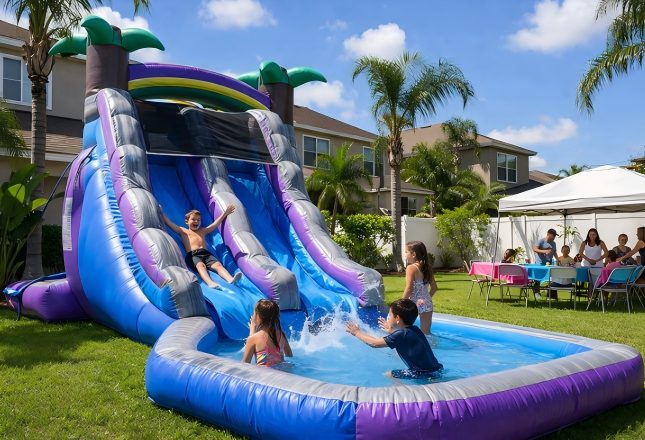
- Water slides dominate demand
- Bookings cluster heavily on Saturdays
- Routes become tighter and more difficult to manage
But summer also brings challenges:
- Afternoon storms can disrupt schedules
- Heat affects both customers and staff
- Equipment wear increases due to heavy use
This is also when equipment durability starts to matter more. Constant sun exposure and repeated weekend use can take a toll, especially during peak season.
Operators who plan ahead usually perform much better during this period than those reacting day by day.
Fall Is More Stable Than People Expect
After summer, many expect demand to drop sharply.
In Orlando, it doesn’t.
From September through November:
- Weather becomes more comfortable
- Outdoor events continue
- School and community events remain active
In many cases, fall weekends are easier to manage than summer, while still generating steady revenue.
Winter Is Slower — But Still Active
From December through February, demand softens.
You’ll see:
- Fewer bookings overall
- More reliance on weekends
- Less urgency from customers
But bookings don’t disappear.
Holiday events, indoor setups, and occasional warm weekends still create opportunities.
During this period, smaller units that can fit into garages, covered patios, or indoor venues often become more practical and see more consistent demand.
For many operators, this is the time to:
- Maintain equipment
- Adjust inventory
- Prepare for the next busy cycle
Why Seasonality Matters More Than People Think
Understanding seasonality isn’t just about knowing when you’ll be busy.
It affects how you run the entire business.
It determines:
- What inventory you invest in
- How you price during different months
- How you plan staffing and routes
- When you promote or hold back
Operators who ignore these patterns often feel like the business is unpredictable.
Those who understand them start to see the year as a cycle instead of a series of random weekends.
The Bottom Line
In Orlando, inflatable rentals don’t follow a simple “on or off” season.
Demand is there year-round — but it shifts in intensity and type.
Once you recognize those shifts, you can plan ahead instead of reacting.
And that’s usually the difference between a business that feels chaotic and one that runs smoothly, even during the busiest months.