

How Are Wind Safety Rules Enforced in Texas?

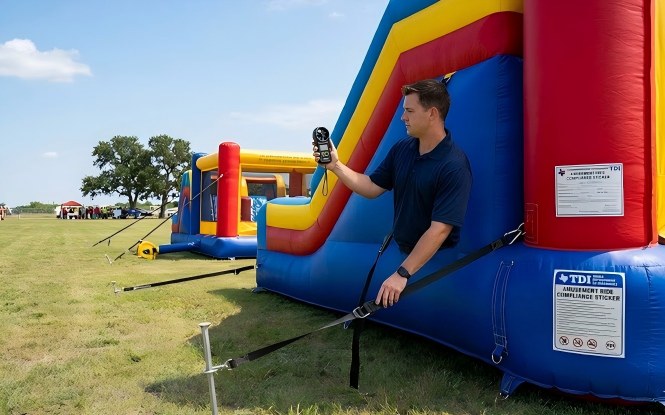
Many Texas inflatable operators have experienced the same situation.
The inflatable is fully set up.
The kids are arriving.
The weather looks completely fine.
Then suddenly, the wind changes.
Within minutes, attendants begin watching the inflatable more closely, parents start looking at the sky, and event organizers start asking questions.
In Texas, wind safety is not treated as a small issue.
Because of the state’s unpredictable weather, open event spaces, and powerful seasonal storms, wind safety has become one of the most important parts of operating commercial inflatables professionally.
For many rental companies, understanding wind safety is not only about protecting equipment — it is also about protecting customers, maintaining insurance coverage, and avoiding serious liability problems.
Texas Treats Commercial Inflatables as Regulated Amusement Equipment
In Texas, commercial inflatables are commonly regulated under amusement ride safety requirements.
Many operators are familiar with the Texas Department of Insurance (TDI), which oversees amusement ride compliance within the state.
Professional operators are often expected to maintain:
- Current inspection documentation
- Proper insurance coverage
- Safe anchoring procedures
- Operational safety records
- Manufacturer safety information
Many commercial inflatables operating legally in Texas also display current-year compliance stickers after passing inspection requirements.
For schools, churches, fairs, and public events, these details are often checked more carefully than many beginners expect.
Wind Safety Is Taken Very Seriously
Texas weather can change quickly, especially during:
- Spring storm season
- Summer afternoons
- Open-field school events
- County fairs
- Church festivals
A calm morning can quickly turn into strong gusts or fast-moving thunderstorms later in the day.
Because of this, many experienced Texas operators monitor weather conditions throughout the event rather than only during setup.
For newer businesses, one of the biggest mistakes is assuming that sunny weather automatically means safe operating conditions.
The 15–20 MPH Rule Is Commonly Referenced
While exact manufacturer limits may vary, many operators and event organizers in Texas closely follow the commonly discussed 15–20 mph wind safety range.
In general:
- Sandbag-secured units are often treated more cautiously at lower wind speeds
- Staked commercial inflatables may allow slightly higher operating tolerance
- Strong gusts usually require immediate shutdown decisions
Many professional operators stop operation well before weather conditions become dangerous.
Insurance companies and event organizers increasingly expect operators to appear proactive rather than reactive when weather conditions begin changing.
Proper Anchoring Is One of the Biggest Areas of Enforcement
One of the first things inspectors or event organizers often examine is anchoring.
Texas setup locations vary significantly, including:
- Grass fields
- Dry soil
- Concrete
- Asphalt
- Artificial turf
Different surfaces require different anchoring methods.
Professional operators often carry:
- Heavy-duty stakes
- Sandbags
- Anchor straps
- Multiple anchoring systems
Commercial inflatables are typically manufactured with reinforced anchor points and heavy-duty D-rings to improve outdoor stability.
Many Texas operators also prefer commercial-grade 0.55mm PVC inflatables because heavier materials generally provide better durability and structural stability during repeated outdoor operation.
However, even high-quality equipment still depends on proper installation and operator judgment.
Daily Inspection Procedures Matter More Than Many Beginners Realize
Many experienced Texas operators perform inspection routines before every major rental.
These checks may include:
- Anchor inspections
- Blower testing
- Vinyl condition checks
- Wind monitoring
- Setup verification
Some companies also maintain daily inspection logs that record:
- Weather conditions
- Wind observations
- Equipment condition
- Staff supervision
- Setup confirmation
Keeping organized records not only improves professionalism, but may also become important during insurance investigations or liability disputes.
Schools and Public Events Often Have Additional Safety Requirements
Many schools, churches, and municipalities now ask inflatable companies detailed safety questions before approving setups.
Operators may be asked about:
- Wind monitoring procedures
- Insurance coverage
- Emergency shutdown plans
- Operator supervision
- Anchoring methods
Some event organizers also request:
- Setup photos
- Inspection records
- Occupancy guidelines
- Manufacturer safety documentation
Larger public events usually apply stricter expectations than private backyard rentals.
In major Texas cities such as Houston, Dallas, and Austin, some schools and municipalities also maintain preferred or approved vendor systems for inflatable providers.
Open Outdoor Areas Create Higher Wind Exposure
Texas has many large open outdoor spaces where wind conditions can become stronger than expected.
This commonly includes:
- School sports fields
- Fairgrounds
- Ranch properties
- Church parking lots
- Public parks
Unlike residential backyards, these locations often provide very little natural wind protection.
Experienced operators usually evaluate setup locations carefully before installation begins.
Even when conditions initially appear calm, open spaces can become difficult to manage once weather patterns shift.
Insurance Companies Expect Professional Wind Procedures
Many commercial inflatable insurance providers expect operators to follow reasonable wind safety practices.
Failure to follow manufacturer safety guidance may create problems involving:
- Insurance claims
- Liability disputes
- Event contracts
- Customer injuries
Some operators also include wind-related shutdown clauses directly inside rental agreements to reduce misunderstandings during sudden weather changes.
Clear communication with customers before the event often helps avoid problems later.
Staff Training and Operator Judgment Matter
Wind safety is not only about equipment quality.
It also depends heavily on operator decision-making.
Professional rental companies often train staff to understand:
- Proper anchoring procedures
- Occupancy control
- Weather awareness
- Emergency deflation procedures
- Crowd management
Experienced attendants often watch for warning signs such as:
- Increasing gust strength
- Sudden temperature changes
- Dark storm movement
- Inflatable instability
In many situations, operators must make fast decisions before weather conditions become dangerous.
Public Awareness Around Inflatable Safety Has Increased
Over the years, inflatable-related wind incidents across the United States have increased public awareness about inflatable safety.
As a result, many schools, parents, and event organizers now expect operators to appear knowledgeable about:
- Wind limits
- Anchoring systems
- Weather monitoring
- Safe shutdown procedures
- Attendant supervision
Professional communication during setup often helps build trust with both customers and venue managers.
Commercial-Grade Equipment Makes Long-Term Operation Easier
Professional inflatable rental companies in Texas often prefer commercial-grade equipment designed for repeated outdoor operation.
Commercial inflatables are commonly built with:
- Heavy-duty PVC materials
- Reinforced stitching
- Stronger anchor systems
- Heavy-duty D-rings
- Reinforced stress points
Many operators also perform routine inspections before busy weekends to check:
- Anchor condition
- Vinyl wear
- Blower performance
- Stitching strength
- Overall inflatable stability
In Texas heat and outdoor conditions, durability and structural stability become especially important over long periods of commercial use.
Final Thoughts
Wind safety rules in Texas are enforced through a combination of:
- State-level safety oversight
- Venue requirements
- Insurance expectations
- Industry safety standards
- Operator responsibility
- Weather awareness
For professional inflatable rental businesses, safe operation involves much more than simply setting up equipment.
Proper anchoring, weather monitoring, staff training, inspection procedures, and responsible decision-making all play an important role in operating commercial inflatables safely in changing Texas weather conditions.
For many experienced operators, wind safety is not treated as a minor technical detail — it is simply part of running a professional inflatable rental business in Texas.