How Do U.S. Standards Differ from European EN14960?

If you’ve ever compared inflatable products from different suppliers, you’ve probably noticed something confusing. Some talk about EN14960. Others mention ASTM F2374.
At first glance, they seem similar. Both are “safety standards.” Both are widely used. But in practice, they approach safety from completely different angles.
Understanding that difference matters—especially if you’re operating in the U.S. or importing equipment from overseas.
Two Standards, Two Philosophies
The biggest difference isn’t in the technical details. It’s in how each system defines safety.
In Europe, EN14960 is a product-focused standard. It’s about how the inflatable is built. The assumption is simple: if the unit is designed and manufactured correctly, it will be safe to use.
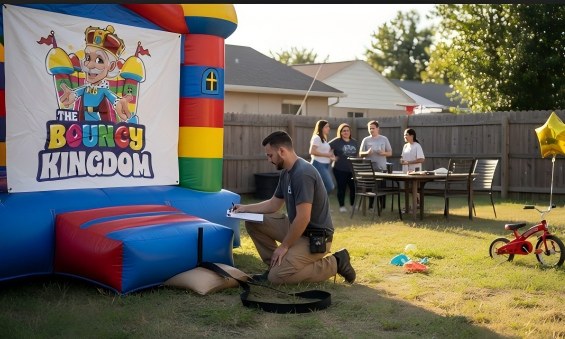
In the United States, ASTM F2374 takes a different approach. It’s an operation-focused standard. It assumes that even a well-built inflatable can become unsafe if it’s used incorrectly. So the standard focuses heavily on how the equipment is actually operated.
EN14960 vs ASTM F2374: Design vs Operation
Here’s the difference in a more practical way:
| Aspect | EN14960 (Europe) | ASTM F2374 (U.S.) |
|---|---|---|
| Focus | Product design and construction | Operation and supervision |
| Main Concern | Structural safety | Safe usage and management |
| Covers | Anchoring, wall height, materials | User limits, attendants, inspections |
| Approach | Engineering-based | Usage-based |
| Compliance Style | Certification-driven | Responsibility + documentation |
This is why a unit that “passes EN14960” doesn’t automatically meet expectations in the U.S. market. The product might be compliant—but the operation still needs to be managed correctly.
What EN14960 Actually Covers
EN14960 is very specific about how an inflatable should be built. It includes requirements such as:
- Minimum wall heights to prevent falls
- Proper anchoring systems and anchor point distribution
- Material strength and stitching reinforcement
- Stability under normal operating conditions
If a unit meets EN14960, it means the structure itself has been engineered with safety in mind.
This is why EN14960 is widely used across the UK and Europe, especially for rental businesses that rely on standardized equipment.
What ASTM F2374 Focuses On
ASTM F2374 shifts the responsibility toward the operator.
Instead of asking “Is this inflatable built correctly?”, it asks:
“Is this inflatable being used safely right now?”
Key areas include:
- Maximum number of users at any time
- Separation by age and size
- Continuous adult supervision
- Wind monitoring and weather conditions
- Setup, anchoring checks, and daily inspections
ASTM F2374 also requires a permanent safety label near the entrance, showing capacity limits and manufacturer details. Checking that label is expected to be part of every setup.
In other words, compliance isn’t just about the product—it’s about what happens during every rental.
Why This Difference Matters in the Real World
This gap becomes very clear when you actually run a rental business.
In Europe, once you have certified equipment, the system is relatively straightforward. The focus is on making sure the product meets the standard.
In the U.S., even with high-quality equipment, responsibility doesn’t stop there. Insurance companies, inspectors, and even customers expect operators to follow documented safety procedures.
For example:
- A properly built inflatable can still be shut down if wind conditions are unsafe
- A unit can be considered non-compliant if too many users are inside
- Missing supervision can create liability, even if the product itself is perfect
That’s why U.S. operators often think less about “certification” and more about risk management.
Which Standard Is “Stricter”?
This question comes up all the time, but it’s the wrong way to look at it.
EN14960 is stricter on engineering and product design.
ASTM F2374 is stricter on real-world usage and accountability.
They don’t compete with each other—they cover different parts of the same problem.
What Smart Operators Actually Do
Experienced operators don’t treat this as an either-or situation.
They typically:
- Choose equipment that meets strong structural standards (like EN14960)
- Operate according to ASTM-style guidelines for supervision and safety
- Keep clear documentation for inspections and insurance purposes
Because in practice, safety isn’t just about how a unit is built or how it’s used—it’s the combination of both.
Final Thought
The real difference between EN14960 and ASTM F2374 comes down to perspective.
One focuses on building a safe product.
The other focuses on running a safe business.
If you understand both, you’re not just compliant—you’re operating at a professional level.